Our bespoke process

What happens when you commission.

Seven steps from consultation to After Care — sequenced below.

The sequence below is how a commission actually runs: what we ask, what we cut, and what stays with the house afterwards.

Seven steps from consultation to After Care.
  1. 01

    Purpose first

    Private consultation

    You meet a tailor privately. The sitting is booked, not drop-in: we ask what the week asks of you, what you already wear, and what this commission has to do.

    Lifestyle, climate, body, comfort, and occasion are written down before a cloth book is opened. You are not shown a catalogue first.

    The appointment is a conversation, not a presentation. We listen, watch how you sit and stand, and take notes you will not have to repeat at the next visit.

    You leave with a recommended direction, a sense of how long the making will take, and the next step if you are ready to continue.
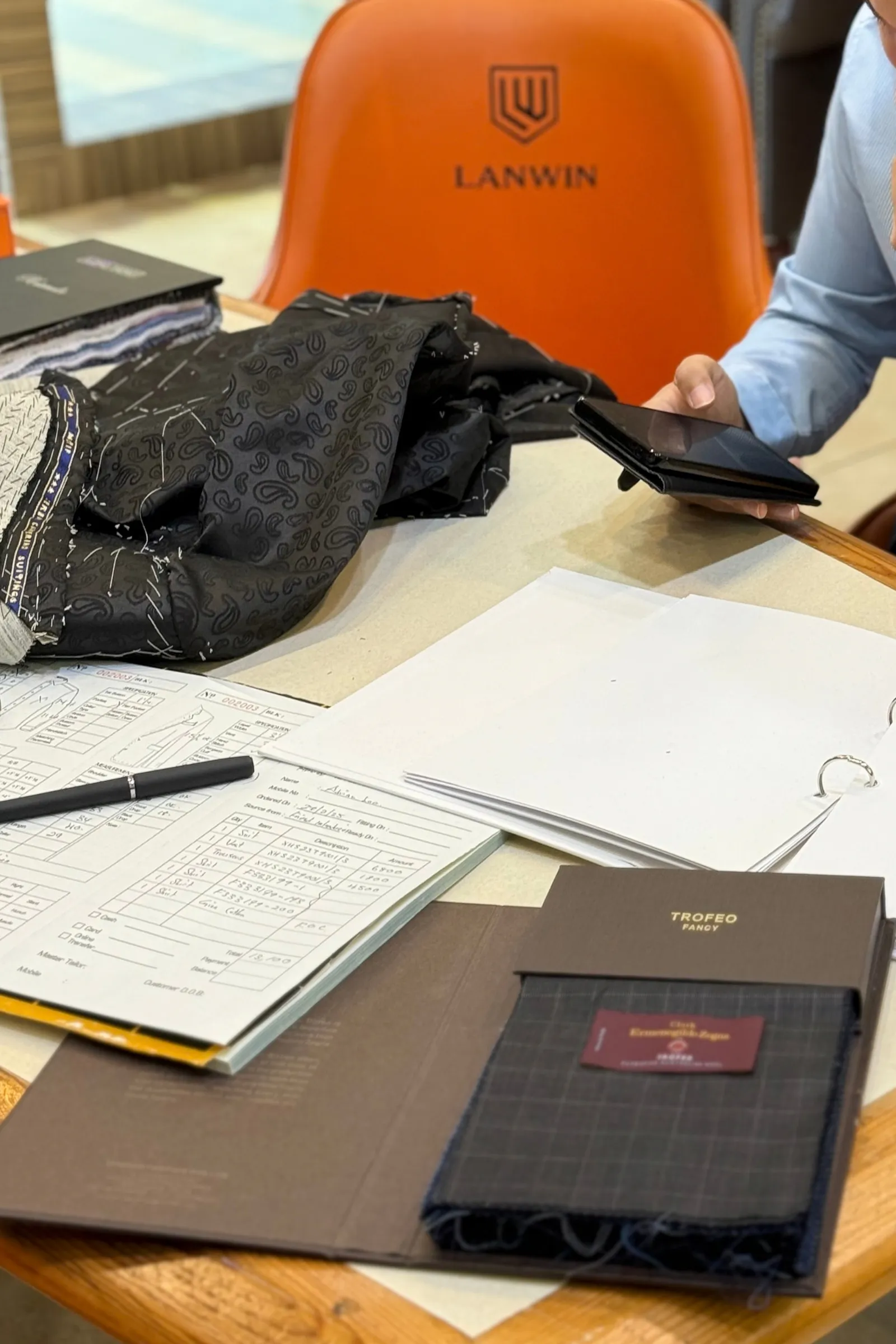
    Tailoring tools prepared for a private consultation
    The first sitting, before cloth.
  2. 02

    Posture and wardrobe first

    Body study and wardrobe direction

    We study how you move. How you stand, whether the shoulders sit rounded or upright, how you sit, how far you walk in a day, whether tension pulls at the jacket when you reach or write.

    Posture, proportion, movement, and lifestyle decide how the garment should be cut. A standard block adjusted to numbers cannot hold your balance; your body is not a statistical average.

    We also read the wardrobe you already own: what works, what previous fittings misread, which occasion needs covering next, and whether you are building a full wardrobe or solving one gap.

    This sitting produces the brief for the pattern: what to cut, how much ease to give, and whether the next piece is a full suit or one gap to close.

    Tailoring mannequin representing a remembered wardrobe record
    Pattern from how you stand and move.
  3. 03

    Climate, comfort, presence

    Fabric and construction selection

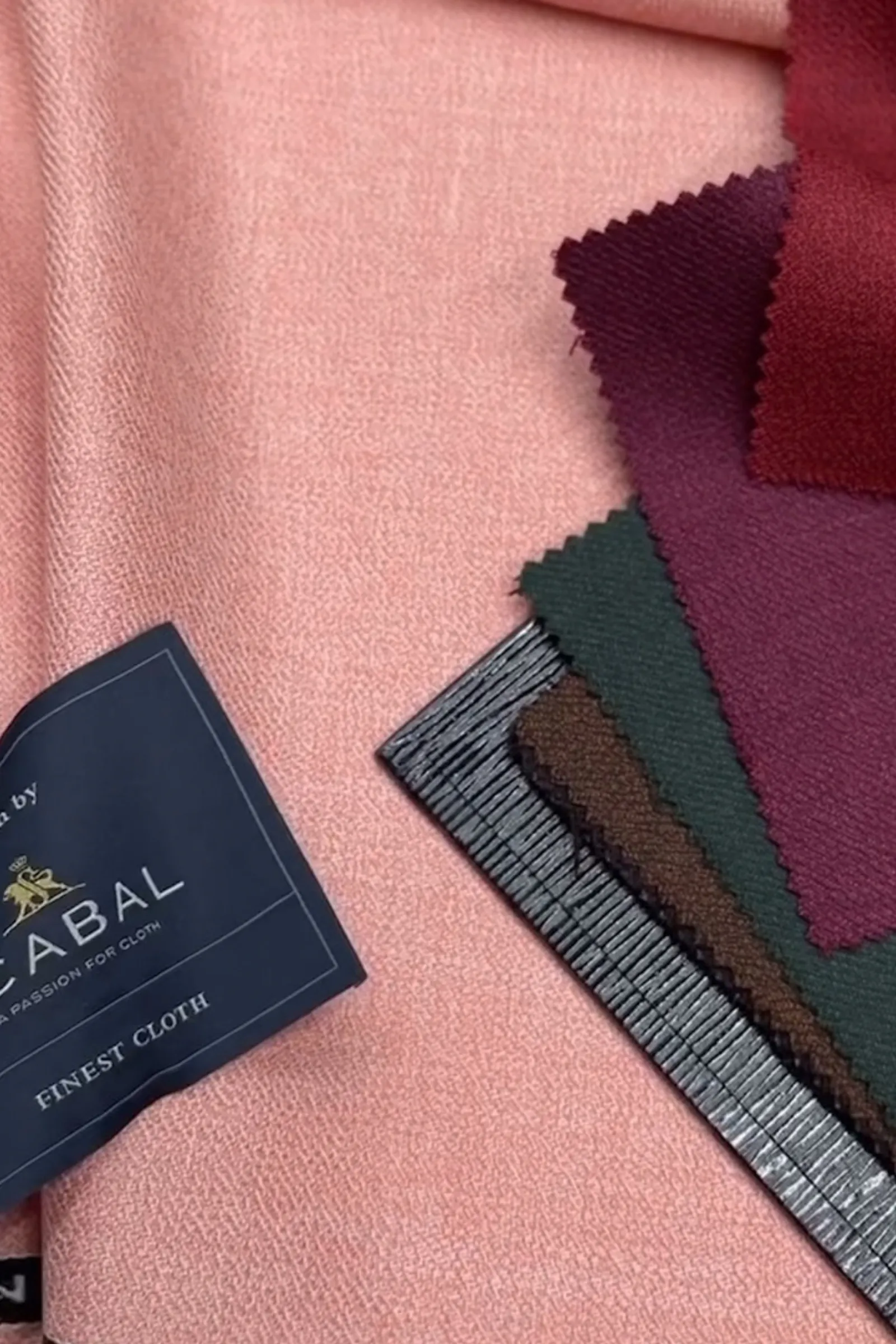
    Cloth is not only colour and texture. Fibre, weight, weave, and finish decide how the garment performs in Malaysian heat and humidity, and through a day that moves between air-conditioning and the street.

    Traditional bespoke was developed for London weather and London occasions. The brief here is different, so cloth and construction are chosen for how you actually wear the garment.

    Seasonal cloth direction reference for tropical tailoring
    Cloth chosen for climate and use.
  4. 04

    Beyond measurement

    Personal pattern and cutting

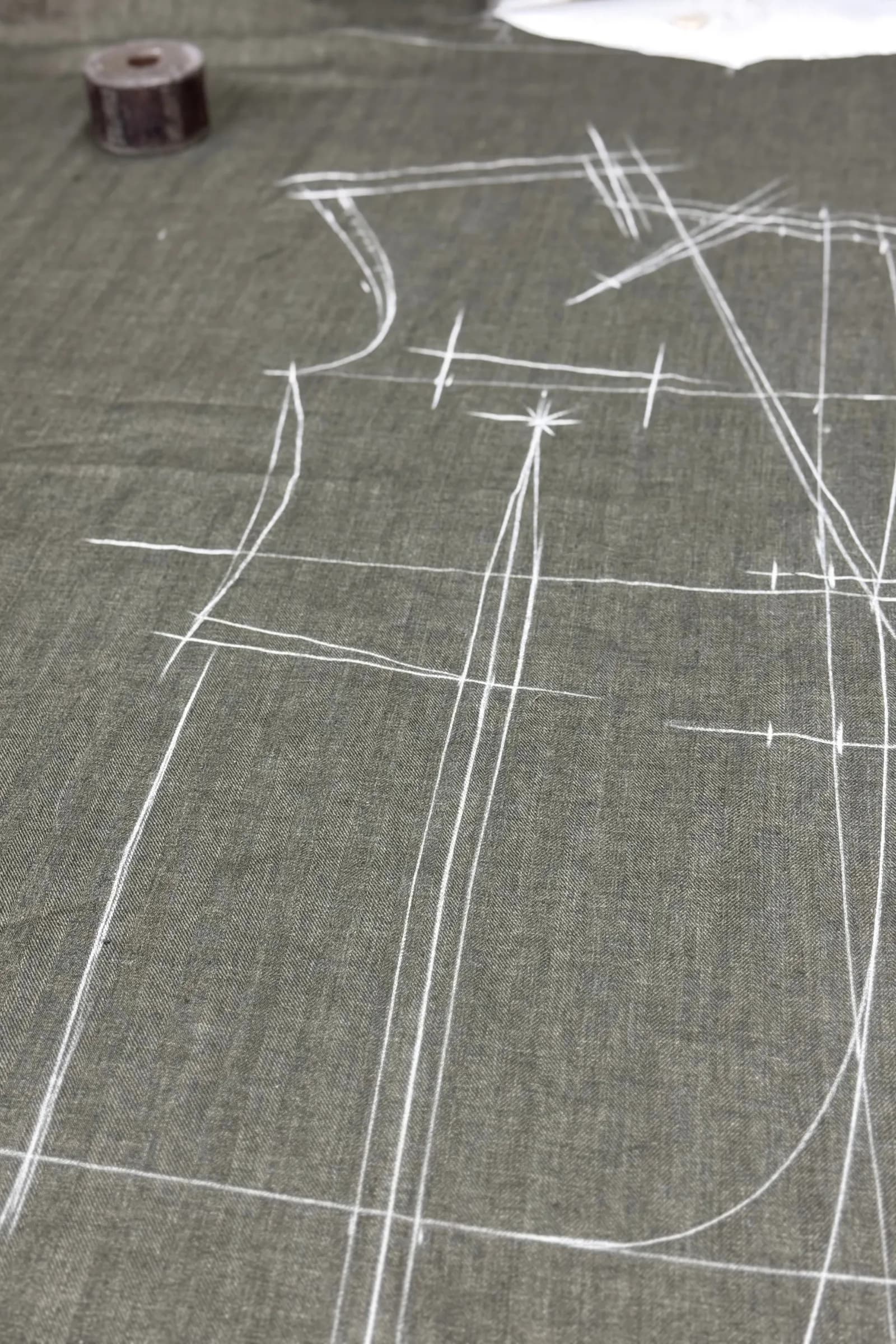
    Measurements are the starting point. From them we draft a personal paper pattern built around your posture, proportion, balance, and movement, and that pattern is used for you alone.

    Pattern and cutting follow this sitting in the workshop that studied you — not from a template or a bench that never met you.

    If a later fitting needs work, the correction is made on this paper pattern, not let out of a finished seam.

    When cutting is done, the pattern is filed with the house so a later commission does not start from a blank sheet.

    Suiting cloth marked with white tailor's chalk lines before cutting
    Pattern chalked on cloth, before cutting.

    Cut for fit. Built for daily wear.

  5. 05

    Tried on you

    Basted fitting and refinement

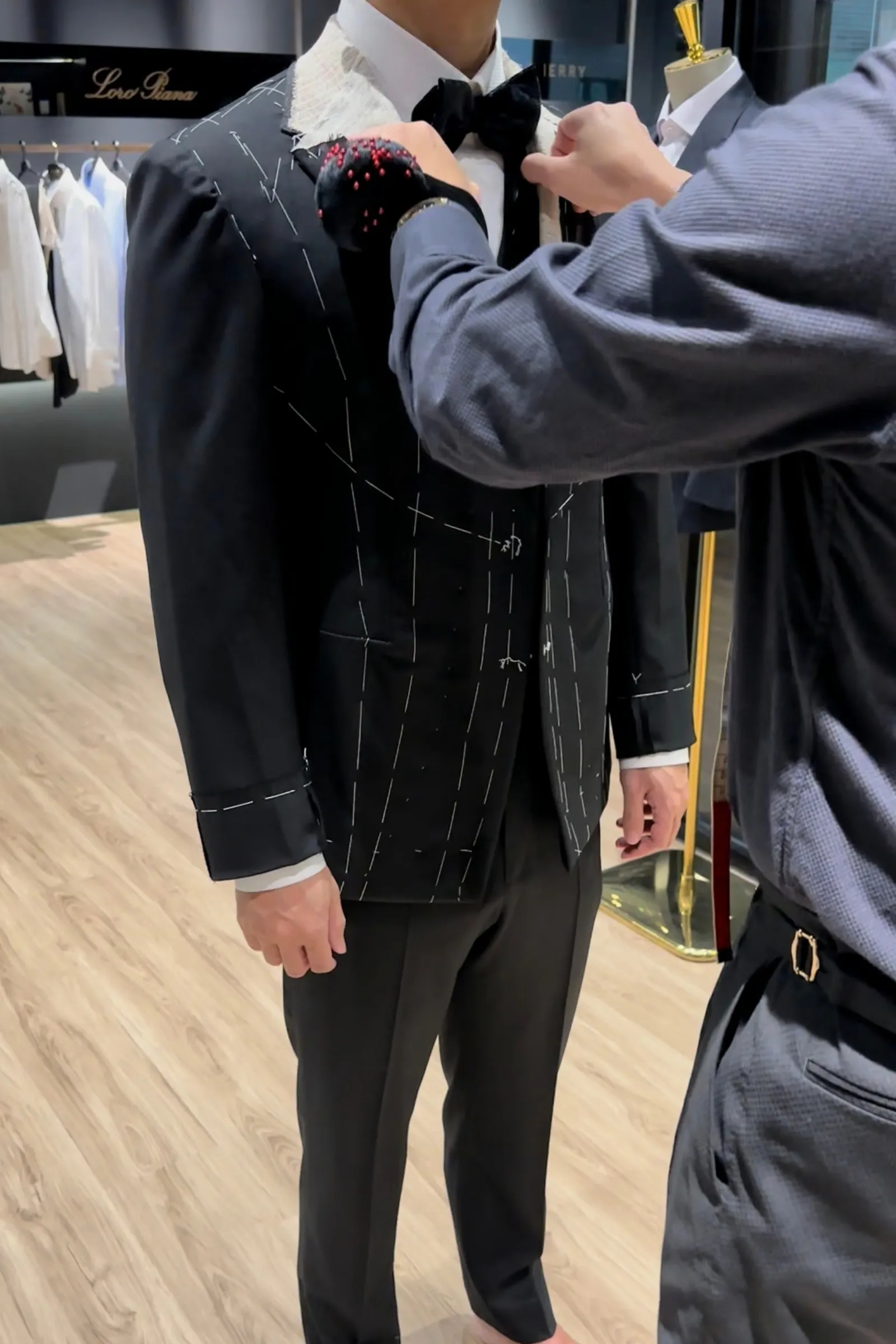
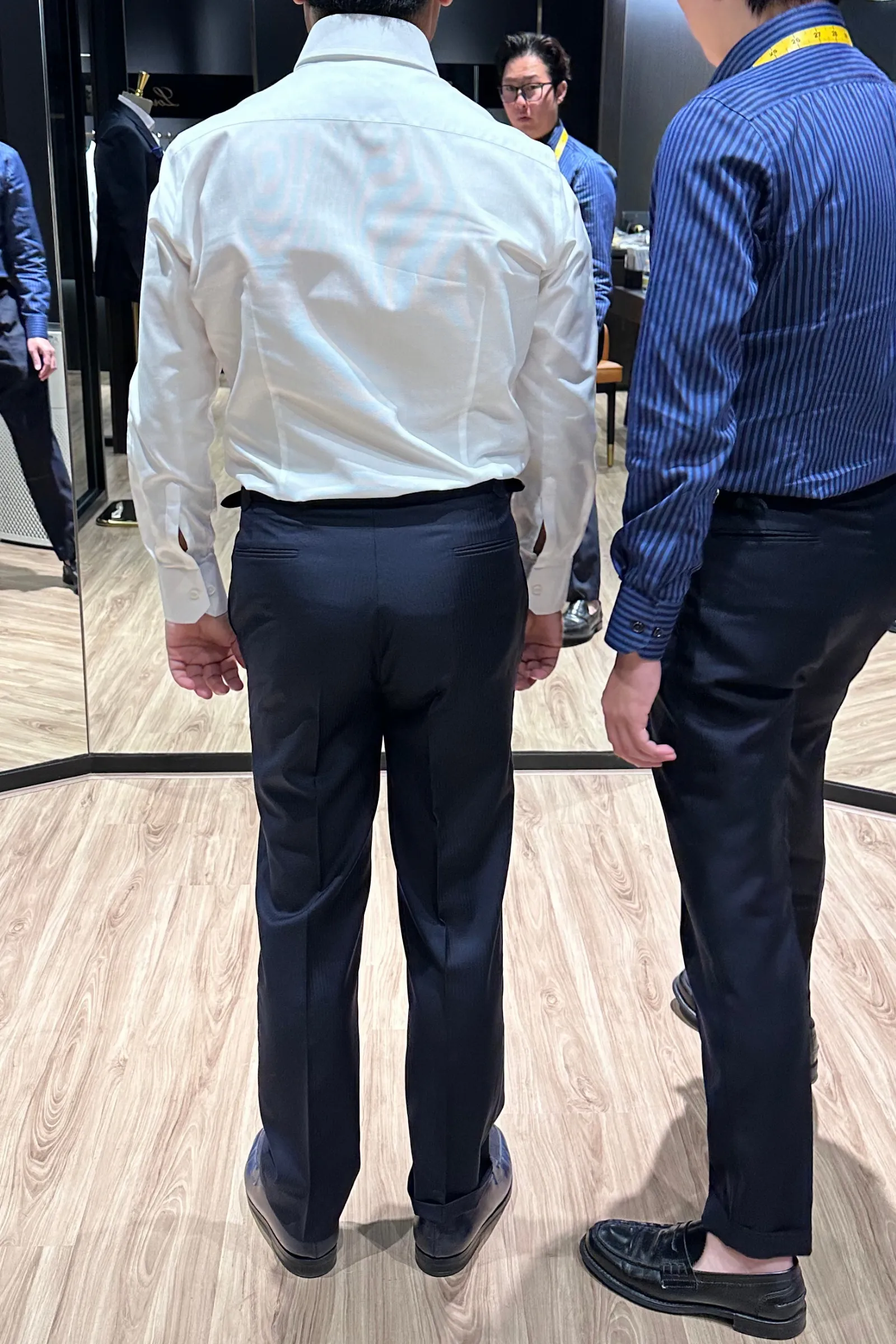
    After cutting, the garment is not finished. It is basted together with temporary stitches you can see, so nothing is permanent while the fit is still being judged.

    You return, put it on, and move. Sit as you would in a meeting, lift an arm to write, turn, reach across your body, walk the room. What looks right standing still is checked in motion.

    If the shoulder sits wrong you feel it. If the sleeve length does not suit how you move, or the jacket pulls when you sit, it shows now — before the final seams go in.

    Corrections are made to the pattern itself, not let out of a seam afterwards. The step adds time to the process, and it is what decides whether the finished garment is comfortable enough to wear every week.

    Lightweight tailoring reference for movement and fitting review
    A suit should not become a burden.
  6. 06

    Ready for its purpose

    Final finishing and pressing

    Once the basted fit is right, the real construction begins. Canvas is fully attached, lapels are rolled, buttonholes are finished, lining is set, and buttons go on.

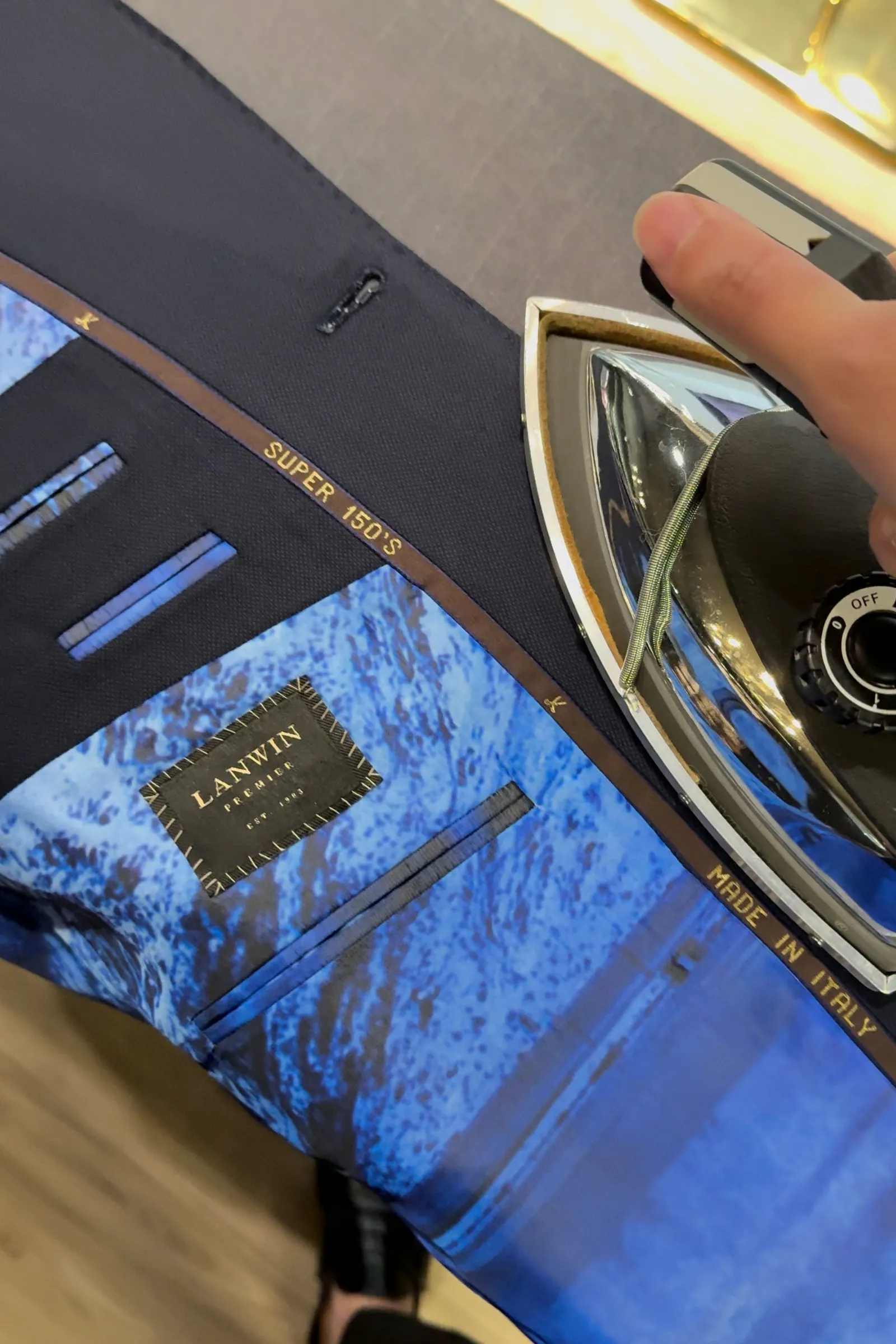
    Final pressing is deliberate work that sets the garment's form. Finishing stays in-house, so nothing is rushed and no one downstream decides what the garment was meant to do.

    The result is ready for repeat wear from the first day: no breaking-in period, and no first trip to the cleaners to make it sit properly.

    Hand pressing a finished LANWIN jacket with an iron before collection
    Pressed by hand before collection.
  7. 07

    Cared for over time

    Wardrobe memory and annual care

    Collection is not the end. The commission stays on file — measurements, pattern, cloth, and how your body has changed since.

    After Care is pressing, annual visits, and the path back to the house when the piece needs work.

    Read about After Care
    Completed tailoring silhouette prepared for final fitting
    The relationship continues.

Private Consultation

Your first appointment settles purpose, cloth, and timeline.

Start a private consultation. A master tailor meets you privately, reads your brief, and confirms garment, cloth, construction, and timeline before making begins.

Strictly by appointment